
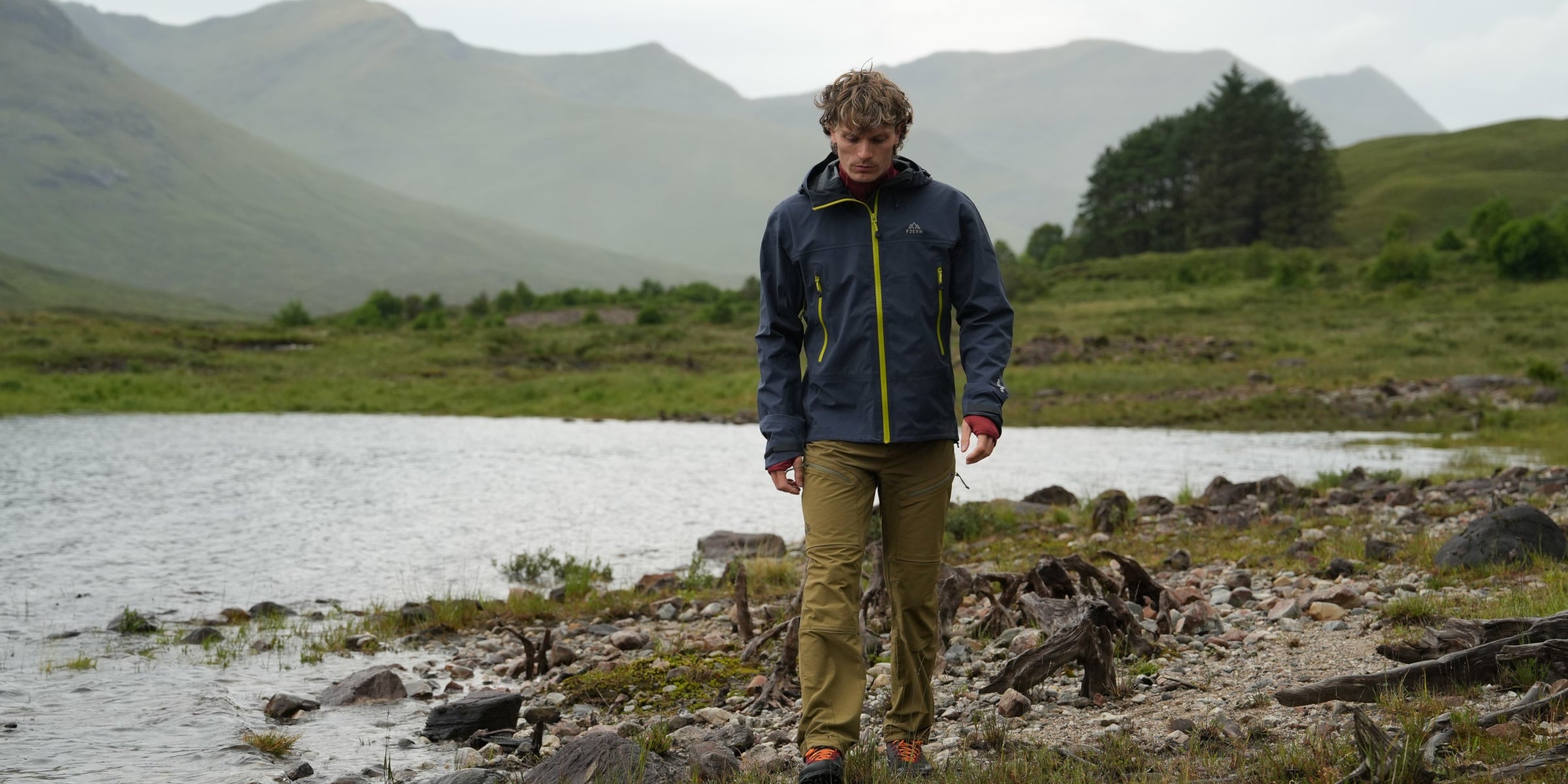

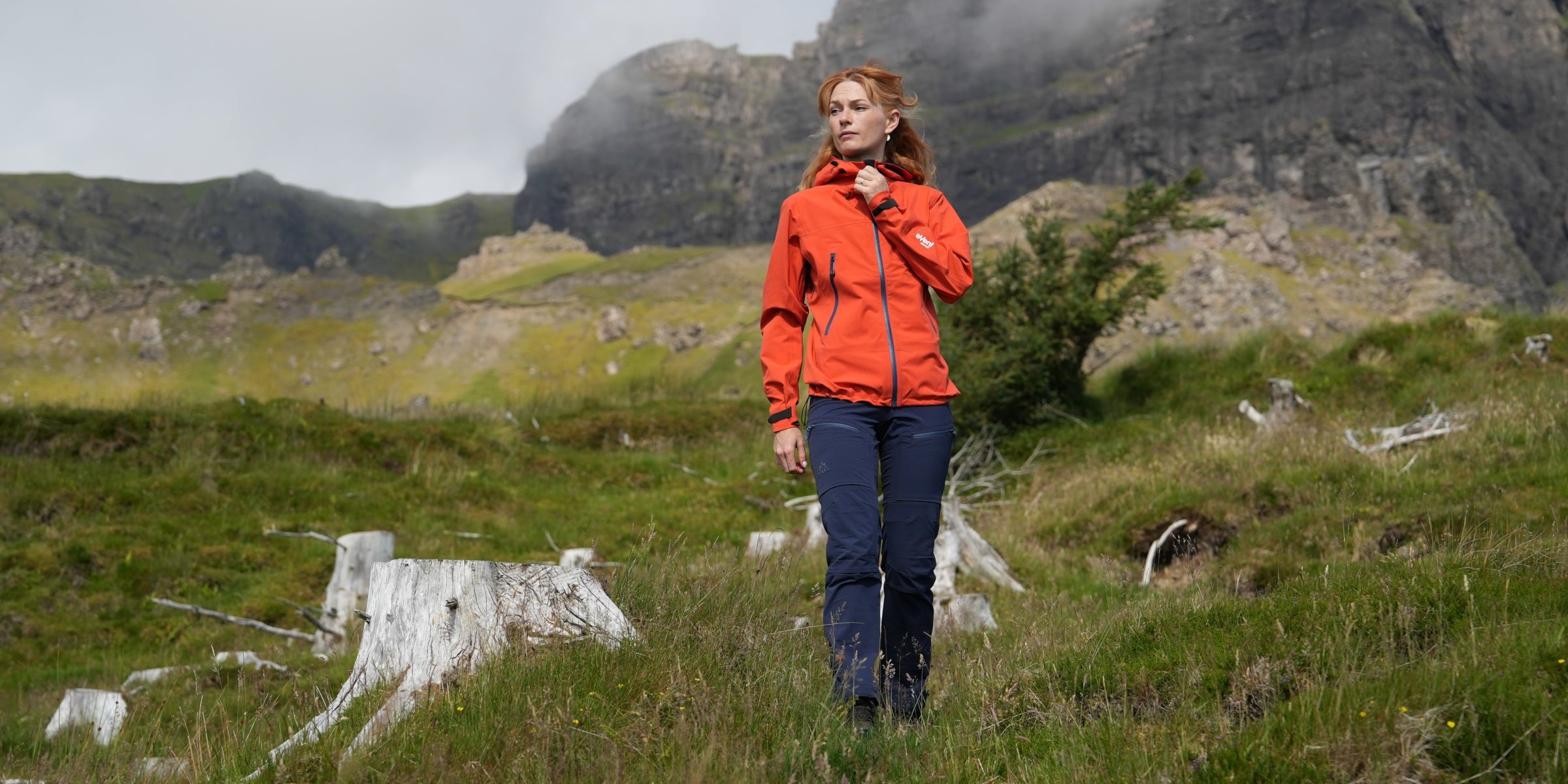

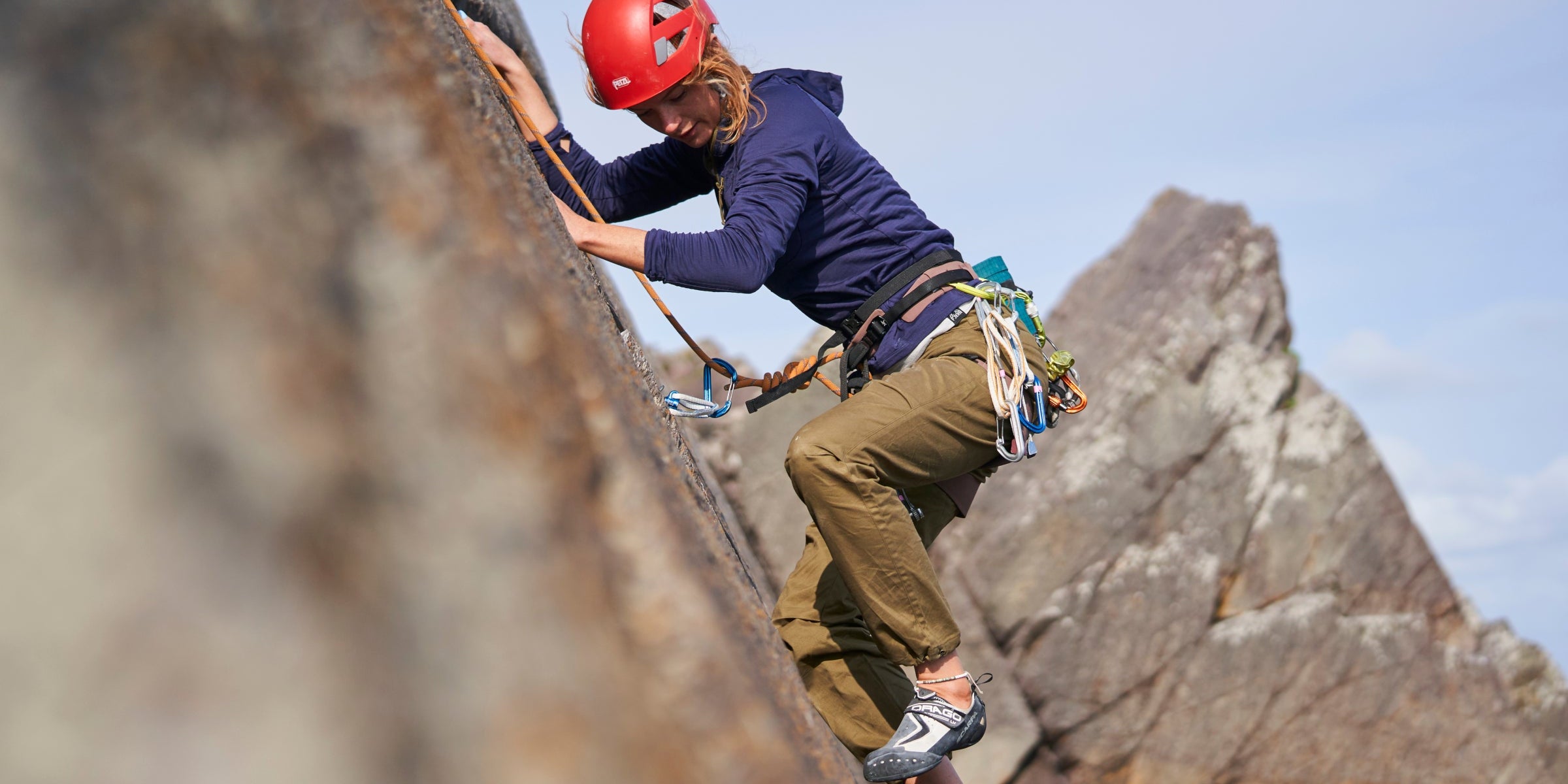



A 3-layer fabric bonds three materials into a single piece: an outer face fabric, a waterproof membrane, and an inner lining. The membrane is sandwiched and protected on both sides, which is what makes 3-layer the most hardwearing way to build a waterproof.
A waterproof has two jobs that fight each other
Keeping rain out is the easy part. A plastic bin bag does that. The hard part is doing it while still letting the heat and sweat your body produces get out. Seal yourself in something fully waterproof and you stay dry from the rain but soak yourself from the inside instead.
Every waterproof jacket is an answer to that tension. The clever bit is a thin membrane that blocks liquid water from getting in while still letting water vapour pass out. The number of layers describes how that membrane is built into the fabric, and how well protected it is.
It all comes down to the membrane
Most membranes are an incredibly thin sheet covered in microscopic pores. The pores are the trick. They are far too small for a drop of liquid water to squeeze through, but large enough for an individual water vapour molecule to pass. Rain stays out. Sweat, as vapour, escapes.
Not all of them work this way. A second type has no pores at all. It is a solid film that passes vapour chemically, absorbing it on the warm, damp side next to your body and releasing it on the cooler outside. Different method, same result: liquid out, vapour through.
For years the benchmark material was ePTFE, the membrane behind classic Gore-Tex and eVent. It performs brilliantly, but it is a fluoropolymer, which makes it a PFAS, one of the "forever chemicals" now being phased out of outdoor kit on environmental and health grounds. That shift is well underway. California banned PFAS from most clothing in 2025, and the big membrane makers have already switched: Gore to an ePE (expanded polyethylene) membrane, eVent to plant-based membranes made from bio-based PA11. These are still plastics, just without the fluorine.
On its own, a membrane is delicate. It tears, it picks up oils from your skin, and it can be damaged by abrasion. So it never goes in a jacket alone. It needs protecting, and how it gets protected is exactly what separates 2-layer, 2.5-layer, and 3-layer fabrics.
The three layers
In a 3-layer fabric, all three parts are laminated together into a single sheet. From the weather side inward:
01 |
Outer face fabricA tough woven outer, usually nylon or polyester, that takes the abrasion from packs, rock and branches. It carries a DWR (durable water repellent) finish so rain beads up and rolls off rather than soaking in and adding weight. |
02 |
Waterproof membraneThe microporous sheet that does the actual waterproofing and breathing. Bonded directly to the back of the face fabric so it is held flat and protected from the outside. |
03 |
Inner liningA thin knit backer bonded to the inside of the membrane. It shields the membrane from sweat, oils and wear, helps move moisture toward it, and gives the jacket a comfortable, finished feel inside. |
The defining feature of 3-layer is that the membrane is sandwiched between the face fabric and a bonded lining, so it is protected on both sides. There is no loose liner to snag, wet out, or wear through.
How the numbers actually differ
The layer count is really a count of how the membrane is sandwiched. Here is what changes between the three common builds.
Liner hangs free
Face fabric and membrane are bonded, then a separate mesh or fabric liner hangs loose inside. Common, comfortable and good value, but bulkier and the membrane is less protected.
A half layer
Instead of a full liner, a thin protective layer is printed or sprayed onto the inside of the membrane. The lightest and most packable build, ideal for emergency shells, though less durable and breathable.
One bonded sheet
Face fabric, membrane and knit lining laminated as one. The most hardwearing, the best protected membrane, and no loose liner. Usually the choice for serious mountain and all-weather use.
When 3-layer is worth it, and when it is not
More layers is not automatically better, it is better for a specific kind of use. Heavier, more protective fabric earns its place when you are out for longer, working harder, or in rougher conditions.
3-layer when:
- You are out for full days or multi-day trips
- You carry a pack that rubs at the shoulders and hips
- You are in sustained wind, rain or mountain weather
- You want the most durable jacket you will keep for years
2 or 2.5-layer when:
- You want the lightest shell that packs down small
- It is an emergency layer that lives in the bottom of the bag
- You are doing lower-output, around-town or commuting use
- Value and weight matter more than maximum durability
A 3-layer jacket needs looking after
No waterproof breathes if it is dirty, and none beads water once the DWR wears off. Both are easy to restore, and a clean jacket is a more breathable jacket.
So, what does 3-layer waterproof mean?
It means the waterproof membrane is bonded between a tough outer face fabric and an inner lining, all in one sheet. That sandwich protects the membrane on both sides, which is why 3-layer fabrics are the most durable and the best suited to hard, sustained use in the worst weather. Lighter 2 and 2.5-layer models trade some of that toughness for less weight and a smaller pack size, which is exactly right for some days out. Knowing the difference just means matching the jacket to where you are going.